
Student-Built Wearable Sensor Research Accepted at IEEE 2025
There were three students—different in age and living in different places—who first met during the summer through the Seoul Research Program. Under the mentorship of Professor Nabil Alshurafa of Northwestern University, they began a single collaborative research project together.
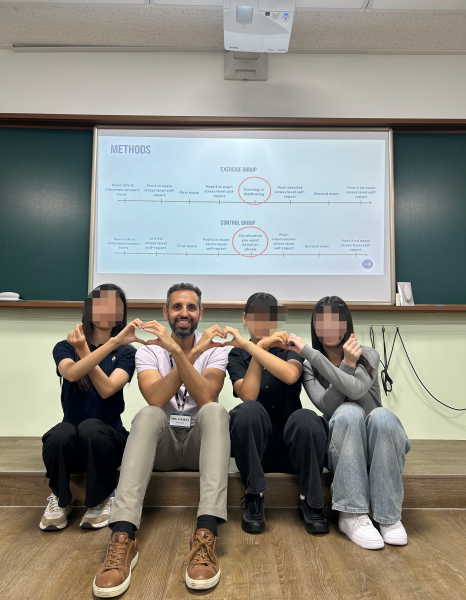
At the outset, their interest was broad and tentative, centered on the general idea of “academic stress.” However, through repeated discussions with their professor, their inquiry gradually became more focused. To answer a simple but meaningful question—Does exercise truly help reduce academic stress?—the students designed and built their own wearable sensors using Arduino. They then conducted experiments in which participants wore the devices while solving SAT problems, carefully collecting and analyzing data before and after the tasks.
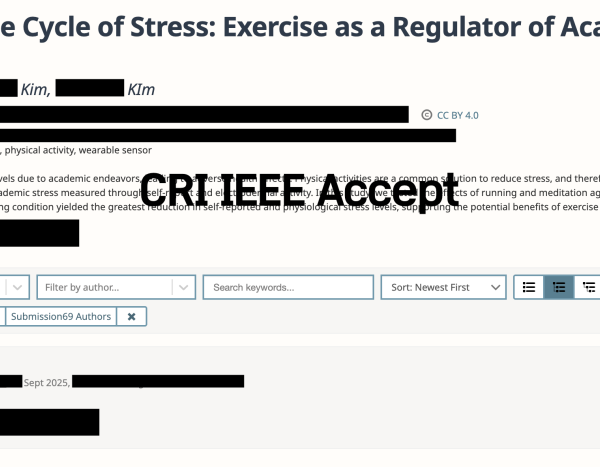
The journey was marked by frequent setbacks and trial and error. Yet the students persevered through each challenge, ultimately completing a full research paper. Their work was officially accepted by the IEEE-EMBS International Conference on Body Sensor Networks (BSN 2025), giving them the opportunity to present as researchers on an international stage in Los Angeles alongside graduate students and leading scholars from around the world.
For high school students to be listed as authors at an international academic conference is exceptionally rare. This is especially true for BSN 2025, one of the world’s most prestigious conferences in the fields of wearable sensors and digital healthcare. Held in Los Angeles this November, the conference brings together prominent researchers and institutions such as Google, USC, and DARPA to share the latest advancements in the field.
When we consider that everyday technologies like Wi-Fi, Bluetooth, and semiconductor standards were all developed under the IEEE, it becomes clear just how influential this organization is. That a high school research project was accepted on the same stage where researchers from MIT, Stanford, Google, and Samsung present their work signifies more than a “valuable experience.” It represents recognition by the global academic community.
What makes this achievement particularly meaningful is that it was entirely student-driven. From developing the research idea to designing sensors, collecting data, revising analyses, and refining the manuscript countless times, the students completed every step themselves. The fact that the academic community recognized this process underscores the significance of their accomplishment—one that even graduate students often find challenging.
Above all, this success is the result of the students’ sustained effort and determination. For us, it has been a privilege to support them along the way and to serve, even briefly, as a stepping stone in their journey.
The Seoul Research Program is not simply a place to acquire knowledge; it is a process through which students experience real research alongside world-class professors. From topic formulation and experimental design to data collection and academic writing, students are guided through the entire research lifecycle, gradually growing into independent researchers. The journey of these three students with Professor Nabil Alshurafa exemplifies the kind of outcomes CRI strives to cultivate.
Our role is to open new paths for students and support them as they walk those paths. This achievement belongs not to CRI, but to the students themselves—we simply helped illuminate the way.
Witnessing students’ accomplishments firsthand is deeply rewarding. Earning recognition at a global academic conference as a high school student is never an easy path, but through consistent effort and passion, these students made it possible. The professor who guided them, the program that supported them, and the students themselves all played essential roles in this achievement.
Looking ahead, CRI remains committed to creating opportunities for students to continue growing. This winter, students will build a strong research foundation through an online program with professors, followed by an Advanced Program next summer in Korea, where they will work in person on more in-depth topics. This integrated online-offline pathway is designed to support deeper, more impactful research outcomes.
We hope this achievement is not an endpoint, but a beginning. CRI will continue to support and guide students with care and dedication, so that even more young researchers can earn recognition on the global stage.